Home
About Us
Core Values, Mission & Vision
Partners
Atty. Alvin Liao Alburo, LL.M.
Atty. Rizzle May Ostia-Alburo
Affiliations & Awards
Practice Areas
Legal Services
Virtual Library
Downloadable Forms
DOLE Handbook
DOLE Library
Department Orders
2026
2025
2024
2023
Labor Advisories
2026
2025
2024
2023
Articles & Videos
Featured Videos
Business Law
Labor Law
Others
Supreme Court Decisions
Legal Articles
Legal FAQs
Topics Directory
Bulletin Board
Training Calendar
Events
Media
Careers
Career Opportunities
Internship Program
Intern Insights
Contact Us
Home
About Us
Core Values, Mission & Vision
Partners
Atty. Alvin Liao Alburo, LL.M.
Atty. Rizzle May Ostia-Alburo
Affiliations & Awards
Practice Areas
Legal Services
Virtual Library
Downloadable Forms
DOLE Handbook
DOLE Library
Department Orders
2026
2025
2024
2023
Labor Advisories
2026
2025
2024
2023
Articles & Videos
Business Law
Labor Law
Others
Supreme Court Decisions
Legal Articles
Legal FAQs
Topics Directory
Bulletin Board
Training Calendar
Events
Media
Careers
Career Opportunities
Internship Program
Intern Insights
Contact Us
Author:
rizzlemay
February 9, 2026
COMPULSORY RETIREMENT AGE FOR EMPLOYEES IN THE PRIVATE SECTOR
February 8, 2026
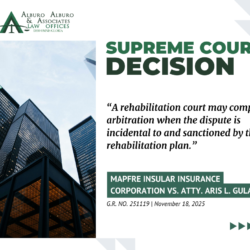
The Supreme Court Decides: A rehabilitation court may compel arbitration when the dispute is incidental to and sanctioned by the rehabilitation plan.
February 7, 2026
Enrolled Bill Doctrine
February 6, 2026
REDUCTION OF INHERITANCE
February 6, 2026
WHAT IS OWNERSHIP?
February 5, 2026
Seafarer’s Work-Related Injuries and Employer Liability
February 4, 2026
MAY AN INHERITANCE BE REPUDIATED?
February 4, 2026
WHO BEARS THE RISK OF LOSS IN A CONTRACT OF SALE?
February 3, 2026
Questions of law vs Questions of fact
Previous Page
1
…
6
7
8
9
10
…
154
Next Page
Search for an article
Search
Search