
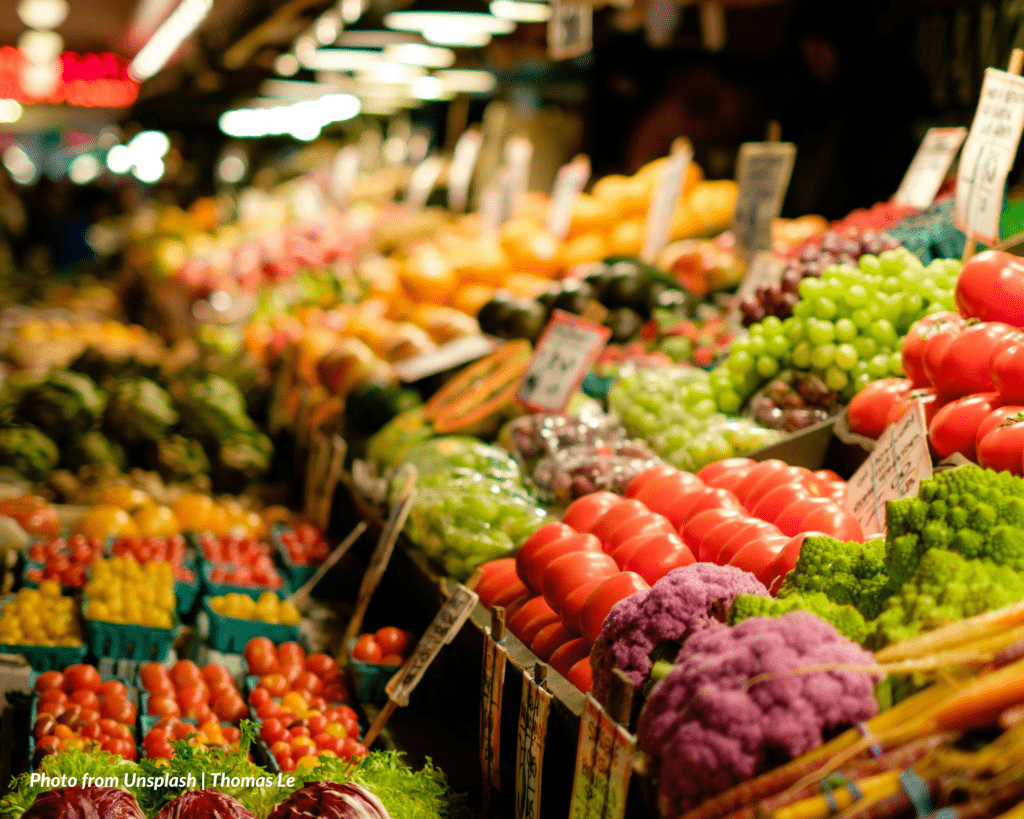
Photo from Unsplash | Thomas Le
This article was originally published on January 20, 2021 and has been updated to reflect recent legal developments.
The following post does not create a lawyer-client relationship between Alburo Alburo and Associates Law Offices (or any of its lawyers) and the reader. It is still best for you to engage the services of a lawyer or you may directly contact and consult Alburo Alburo and Associates Law Offices to address your specific legal concerns, if there is any.
Also, the matters contained in the following were written in accordance with the law, rules, and jurisprudence prevailing at the time of writing and posting, and do not include any future developments on the subject matter under discussion.
AT A GLANCE:
It is the policy of the State to ensure the availability of basic necessities and prime commodities at reasonable prices at all times without denying legitimate business a fair return on investment.
May sellers increase the prices of the goods they sell during emergencies?
In the Philippines, it is the policy of the State to ensure the availability of basic necessities and prime commodities at reasonable prices at all times without denying legitimate business a fair return on investment. It is also a declared policy of the State to provide effective and sufficient protection to consumers against hoarding, profiteering and cartels with respect to the supply, distribution, marketing and pricing of said goods, especially during periods of calamity, emergency, widespread illegal price manipulation and other similar situations.. This is embodied in Republic Act No. 7581, otherwise known as the “Price Act,” as amended by Republic Act No. 10623.
The short answer is: No, sellers do not have absolute freedom to increase prices during emergencies. The law provides mechanisms such as automatic price control and mandated price ceilings.
What are basic necessities?
Section 3(1), Republic Act No. 7851, as amended defines basic necessities as goods vital to the needs of consumers for their sustenance and existence in times of any of the cases provided under Section 6 or 7 of this Act such as, but not limited to:
- Rice, corn, root crops, bread;
- Fresh, dried or canned fish and other marine products;
- Fresh pork, beef and poultry meat;
- Fresh eggs;
- Potable water in bottles and containers;
- Fresh and processed milk;
- Fresh vegetables and fruits;
- Locally manufactured instant noodles;
- Coffee;
- Sugar;
- Cooking oil;
- Salt;
- Laundry soap and detergents;
- Firewood;
- Charcoal;
- Household liquefied petroleum gas (LPG) and kerosene;
- Candles;
- Drugs classified as essential by the Department of Health; and
- Such other goods as may be included under Section 4 of this Act.
Automatic Price Control
Section 6, Republic Act No. 7851, as amended, states that unless otherwise declared by the President, prices of basic necessities in an area shall automatically be frozen at their prevailing prices or placed under automatic price control whenever:
(1) That area is proclaimed or declared a disaster area or under a state of calamity;
(2) That area is declared under an emergency;
(3) The privilege of the writ of habeas corpus is suspended in that area;
(4) That area is placed under martial law;
(5) That area is declared to be in a state of rebellion; or
(6) A state of war is declared in that area.
If the prevailing price of any basic necessity is excessive or unreasonable, the implementing agency may recommend to the President the imposition of a price ceiling for the sale of the basic necessity at a price other than its prevailing price.
Unless sooner lifted by the President, price control of basic necessities under this section shall remain effective for the duration of the condition that brought it about, but not for more than sixty (60) days: Provided , That, in the case of basic necessities that are wholly imported and deregulated under existing laws such as, but not limited to, household LPG and kerosene, price control thereon shall remain effective for a period of not more than fifteen (15) days, taking into consideration the current inventory or supply levels thereof.
The terms “disaster” and “calamity” shall include those brought about by natural or man-made causes, whether local or foreign.
Mandated Price Ceiling
Furthermore, under Section 7, Republic Act No. 7851, the President of the Philippines, upon the recommendation of the implementing agency, or the Price Coordinating Council, may impose a price ceiling on any basic necessity or prime commodity if any of the following condition so warrants:
(1) The impendency, existence, or effects of a calamity;
(2) The threat, existence, or effect of an emergency;
(3) The prevalence or widespread acts of illegal price manipulation:
(4) The impendency, existence, or effect of any event that causes artificial and unreasonable increase in the price of the basic necessity or prime-commodity; and
(5) Whenever the prevailing price of any basic necessity or prime commodity has risen to unreasonable levels.
Are basic necessities the same with prime commodities?
The law says: No. Basic necessities are different from Prime Commodities. Under Section 3(8), Republic Act No. 7851, as amended, “Prime commodities” are goods not considered as basic necessities but are essential to consumers in times of any of the cases provided under Section 7 of this Act such as, but not limited to the following:
- Flour;
- Dried, processed or canned pork, beef and poultry meat;
- Dairy products not falling under basic necessities;
- Onions, garlic, vinegar, patis, soy sauce; toilet soap;
- Fertilizer, pesticides and herbicides;
- Poultry, livestock and fishery feeds and veterinary products;
- Paper;
- School supplies;
- Nipa shingles;
- Sawali;
- Cement;
- Clinker;
- GI sheets;
- Hollow blocks;
- Plywood;
- Plyboard;
- Construction nails;
- Batteries;
- Electrical supplies;
- Light bulbs;
- Steel wire;
- All drugs not classified as essential drugs by the Department of Health; and
- Such other goods as may be included under Section 4 of this Act.
Inclusion or Exclusion from the Coverage of this Act
Upon petition of the concerned parties or motu proprio action from the concerned agency of the Price Coordinating Council and after public hearing, the implementing agency, with the approval of the President, may include in the definition of basic necessities or prime commodities types and brands of the goods or may exclude from the coverage of this Act, types or brands of the goods included in the definition of basic necessities and prime commodities, which may be deemed as nonessential goods or luxury goods: Provided, That, any type or brand so excluded may be reinstated by the implementing agency during occasions of acute shortage in the supply of the basic necessity or prime commodity to which the excluded type or brand used to belong. (Section 4, Republic Act No. 7851, as amended)
Why the Distinction Matters
It is important to determine whether a commodity is classified as a basic necessity or a prime commodity, because different regulatory mechanisms apply.
Basic necessities are subject to automatic price freeze during the enumerated emergency situations. On the other hand, Prime commodities are not automatically frozen, but may be subject to a mandated price ceiling upon proper determination and recommendation.
Related Articles: Retail and Wholesale Price of Commodities
Click here to subscribe to our newsletter
Alburo Alburo and Associates Law Offices specializes in business law and labor law consulting. For inquiries regarding legal services, you may reach us at info@alburolaw.com, or dial us at (02)7745-4391/ 09175772207/ 09778050020.
All rights reserved.