

Alburo Law Offices

Registration Form

Loading form...

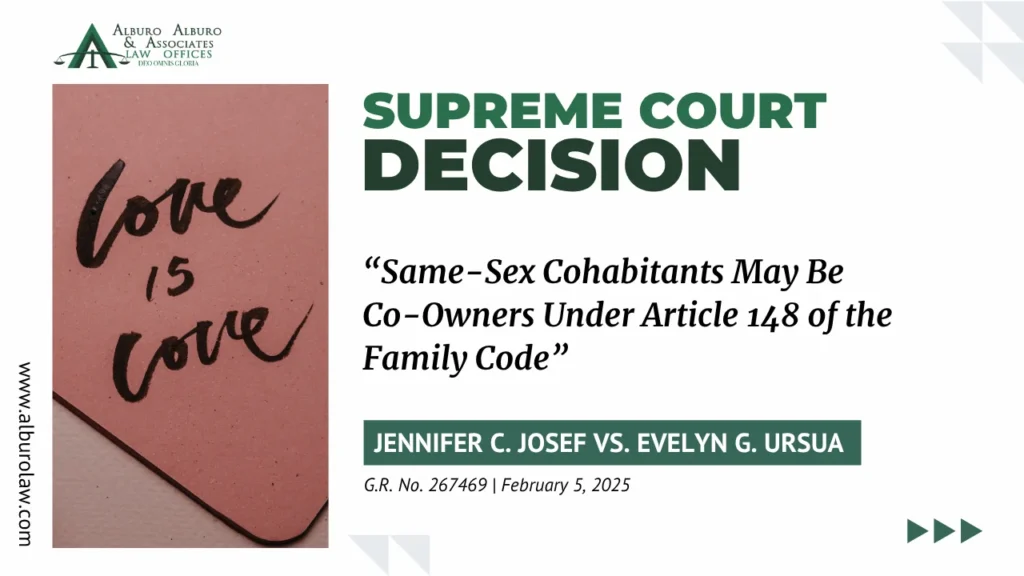
The Supreme Court Decides: Same-Sex Cohabitants May Be Co-Owners Under Article 148 of the Family Code

Legal Excellence Meets Business Insight

Whether you need expert legal counsel or want to sharpen your team’s knowledge of labor and business law, we have the right path for you.

Legal Services

Combined legal excellence with practical business insight — trusted counsel for your most important decisions.

Avail Our Services

Training Calendar

Expert-led sessions on labor law, business law, and more — gain the practical skills to navigate complex legal challenges.

Train With Us
The Supreme Court Decides: Same-Sex Cohabitants May Be Co-Owners Under Article 148 of the Family Code


AT A GLANCE:

The Court likewise ruled that considering that petitioner and respondent have the same sex when they cohabited, they are not capacitated to marry each other, and thus, Article 148 of the Family Code governs their property relations.


In 2005, Jennifer C. Josef (Josef) and Evalyn G. Ursua (Ursua) lived together as a couple. A year later, they purchased a house and lot in Quezon City covered by TCT No. N-289262. They both agreed to register the property solely in the name of Ursua to easily facilitate bank transactions.


On June 18, 2007, Ursua executed an Acknowledgment of Third-Party Interest in Real Property

(Acknowledgement) allegedly acknowledging Josef’s co-ownership over the subject property. It expressly recognized that Josef financed and paid 50% of the expenses in the acquisition and renovation of the subject property.


When they separated, they agreed to sell the house and lot, and to divide the proceeds equally. Later, Ursua changed her mind and refused to sell the property. She also refused to recognize Josef as co-owner of the property and give her share in the property. Josef then executed an Affidavit of Adverse Claim and later filed a Complaint for Partition of Real Estate with Damages.


Ursua stated that she had exclusive ownership of the subject property. She emphasized that the Acknowledgement stated that Josef’s interest over the property was subject to the determination of the actual percentage of interest based on records and documents. However, records lacked proof that Josef contributed to the acquisition of the subject property.


The Regional Trial Court dismissed the complaint, holding that aside from the Acknowledgement, Josef did not offer any proof to establish her claim of co-ownership. 


On appeal, the Court of Appeals denied Josef’s appeal for lack of merit. However, it held that Ursua’s counterclaim for moral damages, exemplary damages, and attorney’s fees lacked sufficient legal and factual bases. 


The issue in this case is whether the Court of Appeals erred in finding that co-ownership was not sufficiently established through Respondent Evalyn G. Ursua’s signed Acknowledgement.


The Supreme Court granted the petition.


The Court held that an action‍​‌‌​​‌​‌​‌‌‌‌​​‌​‌​​‌​‌​​‌‌​‌​‌‌​‌‌​​​‌​​​‌‌​​‌​​‌​​‌‌‌​​​‌‌​​​‌​‌‌​​​‌​​‌​‌​‌‌‌​‌​‌​‌‌​​‌‌‌​‌​‌​‌‌​​‌​​​‌​​​‌‌​​​‌‌‌​​‌​‌‌‌​‌‌‌​‌‌​​‌​​​‌​‌​‌‌‌​‌‌​‌‌​​​‌‌​‌​‌‌​‌​​‌​​‌​‌‌​‌​‌​​‌‌​‌‌‌‌​‌‌​‌​​‌​‌​​‌‌‌‌​‌​‌​‌‌‌​‌​​‌‌​‌​​‌‌​​‌‌​‌​​‌‌‌‌​‌​‌​‌‌‌​‌​‌​‌‌​​‌‌​‌​‌‌​‌​​‌‌​‌​‌​‌​‌​​​‌​​​​​‌​‌‌​‌​​‌​‌​​‌‌​​​‌​​​​‌‌​‌​​‌​‌​​​‌‌​​​‌​‌‌​​​‌‌​​‌‌​​‌​​‌​‌​‌‌​​‌‌‌‌​​‌​‌​‌‌​​​​​‌‌​​‌‌​‌​‌​‌‌​​‌‌‌​​​​​‌​‌‌​‌​​‌​​​​‌‌​‌​​‌​​‌​​‌‌​‌‌​​‌​​‌​​‌​‌‌​‌‌​‌​​‌‌‌​​​​​‌‌​​​​​‌​‌​​​‌​‌​‌​‌‌‌​‌​​‌‌‌​​​‌‌​​‌​​‌‌​​‌​​​‌‌​‌‌​​​‌‌​‌‌​​​‌​​‌​​‌​‌​‌​​‌​​‌​​​‌‌‌​‌‌​‌‌‌‌​‌‌‌‌​​‌​‌​​‌‌‌​​​‌‌​​‌‌​‌​​​​‌​​​‌‌​​‌‌​‌‌​​​​‌​​‌‌​​​‌​‌​​​‌‌​​‌​​‌​‌‌​‌​‌​​​‌​‌​‌​‌​‌​‌‌‌​‌​​​‌​‌​‌​​​‌​​‌​​‌​‌‌​‌​​‌​‌‌‌​‌‌‌​‌‌​‌​​‌​‌‌​​‌​​​‌​​​‌‌‌​‌‌​‌‌​​​‌‌‌​‌​​​‌​‌‌​‌​​‌​‌‌​​​​‌​​‌‌‌​​​‌‌​​​​​‌​‌‌​​‌​‌​‌​‌‌‌​​‌‌​​​‌​‌‌‌​‌‌‌​‌​​‌​​‌​‌‌​‌​‌​​‌‌​‌‌‌‌​‌‌‌‌​​​​‌​​‌‌‌​​‌‌‌‌​‌​​‌‌​​‌‌‌​​‌‌​​‌​​‌​​‌‌​‌​‌​​​‌​​​‌‌​​​‌‌​‌‌‌​‌‌‌​‌​​‌‌‌‌​‌​​​‌​​​‌​​‌​​‌​​‌‌​‌​​​‌‌​​‌‌​​‌​‌​​​‌​​‌‌‌‌​‌​​‌‌‌‌​‌​​‌​‌‌​‌​​‌​‌‌​‌​​‌‌​‌​‌​​‌‌​​‌‌​​‌‌​‌​​​​‌‌‌​​‌​​‌‌​‌‌‌​​‌‌‌​​‌​​‌‌​​‌​​​‌‌​‌‌​​‌‌​​‌​‌​​‌‌​​‌​​‌‌​​​‌​​‌‌​​​​‌​​‌‌​‌‌​​​‌‌‌​​​​​‌‌​​​‌​​‌‌​‌​‌​​‌‌​‌‌​​‌‌​​‌‌​​​‌‌​​​‌​‌‌​​​‌​​​‌‌​​‌‌​‌‌​​​‌​​‌‌​​​‌‌​‌‌​​​‌​​​‌‌​‌​​​​‌‌​​‌‌​​‌‌‌​​‌​​‌‌‌​​‌​​‌‌​​‌‌​​‌‌​​‌​​‌‌​​‌‌​​​‌‌​‌​‌​​‌‌​​​‌​‌‌​​‌​​​​‌‌​​‌‌​‌‌​​​​‌​‌‌​​‌‌​​‌‌​​‌​‌​​‌‌​​​‌​​‌‌​​​‌​‌‌​​​‌​​‌‌​​​​‌​​‌‌‌​​​​​‌‌​​‌​​‌‌​​‌​​​​‌‌​​‌​​​‌‌​​​​​​‌‌​‌​​​​‌‌​​​‌​​‌‌‌​​​​‌‌​​​‌‌​​‌‌‌​​​​‌‌​​​‌​​‌‌​​‌‌​​​‌‌​​​‌​​‌‌‌​​​​​‌‌​​‌​​‌‌​​​‌​​​‌‌​‌​‌​​‌‌​‌​​​‌‌​​‌​‌​‌‌​​​‌​​​‌‌​​​​​‌‌​​‌​‌‍ for partition is premised on the existence or nonexistence of co-ownership between the parties. The court must initially settle the issue of ownership for the simple reason that it cannot properly issue an order to divide the property without first making a determination as to the existence of co-ownership. Indubitably, until and unless this issue of co-ownership is definitely and finally resolved, it will be premature to effect a partition of the disputed properties. 


The sole evidence‍​‌‌​​‌​‌​‌‌‌‌​​‌​‌​​‌​‌​​‌‌​‌​‌‌​‌‌​​​‌​​​‌‌​​‌​​‌​​‌‌‌​​​‌‌​​​‌​‌‌​​​‌​​‌​‌​‌‌‌​‌​‌​‌‌​​‌‌‌​‌​‌​‌‌​​‌​​​‌​​​‌‌​​​‌‌‌​​‌​‌‌‌​‌‌‌​‌‌​​‌​​​‌​‌​‌‌‌​‌‌​‌‌​​​‌‌​‌​‌‌​‌​​‌​​‌​‌‌​‌​‌​​‌‌​‌‌‌‌​‌‌​‌​​‌​‌​​‌‌‌‌​‌​‌​‌‌‌​‌​​‌‌​‌​​‌‌​​‌‌​‌​​‌‌‌‌​‌​‌​‌‌‌​‌​‌​‌‌​​‌‌​‌​‌‌​‌​​‌‌​‌​‌​‌​‌​​​‌​​​​​‌​‌‌​‌​​‌​‌​​‌‌​​​‌​​​​‌‌​‌​​‌​‌​​​‌‌​​​‌​‌‌​​​‌‌​​‌‌​​‌​​‌​‌​‌‌​​‌‌‌‌​​‌​‌​‌‌​​​​​‌‌​​‌‌​‌​‌​‌‌​​‌‌‌​​​​​‌​‌‌​‌​​‌​​​​‌‌​‌​​‌​​‌​​‌‌​‌‌​​‌​​‌​​‌​‌‌​‌‌​‌​​‌‌‌​​​​​‌‌​​​​​‌​‌​​​‌​‌​‌​‌‌‌​‌​​‌‌‌​​​‌‌​​‌​​‌‌​​‌​​​‌‌​‌‌​​​‌‌​‌‌​​​‌​​‌​​‌​‌​‌​​‌​​‌​​​‌‌‌​‌‌​‌‌‌‌​‌‌‌‌​​‌​‌​​‌‌‌​​​‌‌​​‌‌​‌​​​​‌​​​‌‌​​‌‌​‌‌​​​​‌​​‌‌​​​‌​‌​​​‌‌​​‌​​‌​‌‌​‌​‌​​​‌​‌​‌​‌​‌​‌‌‌​‌​​​‌​‌​‌​​​‌​​‌​​‌​‌‌​‌​​‌​‌‌‌​‌‌‌​‌‌​‌​​‌​‌‌​​‌​​​‌​​​‌‌‌​‌‌​‌‌​​​‌‌‌​‌​​​‌​‌‌​‌​​‌​‌‌​​​​‌​​‌‌‌​​​‌‌​​​​​‌​‌‌​​‌​‌​‌​‌‌‌​​‌‌​​​‌​‌‌‌​‌‌‌​‌​​‌​​‌​‌‌​‌​‌​​‌‌​‌‌‌‌​‌‌‌‌​​​​‌​​‌‌‌​​‌‌‌‌​‌​​‌‌​​‌‌‌​​‌‌​​‌​​‌​​‌‌​‌​‌​​​‌​​​‌‌​​​‌‌​‌‌‌​‌‌‌​‌​​‌‌‌‌​‌​​​‌​​​‌​​‌​​‌​​‌‌​‌​​​‌‌​​‌‌​​‌​‌​​​‌​​‌‌‌‌​‌​​‌‌‌‌​‌​​‌​‌‌​‌​​‌​‌‌​‌​​‌‌​‌​‌​​‌‌​​‌‌​​‌‌​‌​​​​‌‌‌​​‌​​‌‌​‌‌‌​​‌‌‌​​‌​​‌‌​​‌​​​‌‌​‌‌​​‌‌​​‌​‌​​‌‌​​‌​​‌‌​​​‌​​‌‌​​​​‌​​‌‌​‌‌​​​‌‌‌​​​​​‌‌​​​‌​​‌‌​‌​‌​​‌‌​‌‌​​‌‌​​‌‌​​​‌‌​​​‌​‌‌​​​‌​​​‌‌​​‌‌​‌‌​​​‌​​‌‌​​​‌‌​‌‌​​​‌​​​‌‌​‌​​​​‌‌​​‌‌​​‌‌‌​​‌​​‌‌‌​​‌​​‌‌​​‌‌​​‌‌​​‌​​‌‌​​‌‌​​​‌‌​‌​‌​​‌‌​​​‌​‌‌​​‌​​​​‌‌​​‌‌​‌‌​​​​‌​‌‌​​‌‌​​‌‌​​‌​‌​​‌‌​​​‌​​‌‌​​​‌​‌‌​​​‌​​‌‌​​​​‌​​‌‌‌​​​​​‌‌​​‌​​‌‌​​‌​​​​‌‌​​‌​​​‌‌​​​​​​‌‌​‌​​​​‌‌​​​‌​​‌‌‌​​​​‌‌​​​‌‌​​‌‌‌​​​​‌‌​​​‌​​‌‌​​‌‌​​​‌‌​​​‌​​‌‌‌​​​​​‌‌​​‌​​‌‌​​​‌​​​‌‌​‌​‌​​‌‌​‌​​​‌‌​​‌​‌​‌‌​​​‌​​​‌‌​​​​​‌‌​​‌​‌‍ that petitioner presented to establish the existence of co-ownership is the Acknowledgment executed and signed by respondent. The authenticity‍​‌‌​​‌​‌​‌‌‌‌​​‌​‌​​‌​‌​​‌‌​‌​‌‌​‌‌​​​‌​​​‌‌​​‌​​‌​​‌‌‌​​​‌‌​​​‌​‌‌​​​‌​​‌​‌​‌‌‌​‌​‌​‌‌​​‌‌‌​‌​‌​‌‌​​‌​​​‌​​​‌‌​​​‌‌‌​​‌​‌‌‌​‌‌‌​‌‌​​‌​​​‌​‌​‌‌‌​‌‌​‌‌​​​‌‌​‌​‌‌​‌​​‌​​‌​‌‌​‌​‌​​‌‌​‌‌‌‌​‌‌​‌​​‌​‌​​‌‌‌‌​‌​‌​‌‌‌​‌​​‌‌​‌​​‌‌​​‌‌​‌​​‌‌‌‌​‌​‌​‌‌‌​‌​‌​‌‌​​‌‌​‌​‌‌​‌​​‌‌​‌​‌​‌​‌​​​‌​​​​​‌​‌‌​‌​​‌​‌​​‌‌​​​‌​​​​‌‌​‌​​‌​‌​​​‌‌​​​‌​‌‌​​​‌‌​​‌‌​​‌​​‌​‌​‌‌​​‌‌‌‌​​‌​‌​‌‌​​​​​‌‌​​‌‌​‌​‌​‌‌​​‌‌‌​​​​​‌​‌‌​‌​​‌​​​​‌‌​‌​​‌​​‌​​‌‌​‌‌​​‌​​‌​​‌​‌‌​‌‌​‌​​‌‌‌​​​​​‌‌​​​​​‌​‌​​​‌​‌​‌​‌‌‌​‌​​‌‌‌​​​‌‌​​‌​​‌‌​​‌​​​‌‌​‌‌​​​‌‌​‌‌​​​‌​​‌​​‌​‌​‌​​‌​​‌​​​‌‌‌​‌‌​‌‌‌‌​‌‌‌‌​​‌​‌​​‌‌‌​​​‌‌​​‌‌​‌​​​​‌​​​‌‌​​‌‌​‌‌​​​​‌​​‌‌​​​‌​‌​​​‌‌​​‌​​‌​‌‌​‌​‌​​​‌​‌​‌​‌​‌​‌‌‌​‌​​​‌​‌​‌​​​‌​​‌​​‌​‌‌​‌​​‌​‌‌‌​‌‌‌​‌‌​‌​​‌​‌‌​​‌​​​‌​​​‌‌‌​‌‌​‌‌​​​‌‌‌​‌​​​‌​‌‌​‌​​‌​‌‌​​​​‌​​‌‌‌​​​‌‌​​​​​‌​‌‌​​‌​‌​‌​‌‌‌​​‌‌​​​‌​‌‌‌​‌‌‌​‌​​‌​​‌​‌‌​‌​‌​​‌‌​‌‌‌‌​‌‌‌‌​​​​‌​​‌‌‌​​‌‌‌‌​‌​​‌‌​​‌‌‌​​‌‌​​‌​​‌​​‌‌​‌​‌​​​‌​​​‌‌​​​‌‌​‌‌‌​‌‌‌​‌​​‌‌‌‌​‌​​​‌​​​‌​​‌​​‌​​‌‌​‌​​​‌‌​​‌‌​​‌​‌​​​‌​​‌‌‌‌​‌​​‌‌‌‌​‌​​‌​‌‌​‌​​‌​‌‌​‌​​‌‌​‌​‌​​‌‌​​‌‌​​‌‌​‌​​​​‌‌‌​​‌​​‌‌​‌‌‌​​‌‌‌​​‌​​‌‌​​‌​​​‌‌​‌‌​​‌‌​​‌​‌​​‌‌​​‌​​‌‌​​​‌​​‌‌​​​​‌​​‌‌​‌‌​​​‌‌‌​​​​​‌‌​​​‌​​‌‌​‌​‌​​‌‌​‌‌​​‌‌​​‌‌​​​‌‌​​​‌​‌‌​​​‌​​​‌‌​​‌‌​‌‌​​​‌​​‌‌​​​‌‌​‌‌​​​‌​​​‌‌​‌​​​​‌‌​​‌‌​​‌‌‌​​‌​​‌‌‌​​‌​​‌‌​​‌‌​​‌‌​​‌​​‌‌​​‌‌​​​‌‌​‌​‌​​‌‌​​​‌​‌‌​​‌​​​​‌‌​​‌‌​‌‌​​​​‌​‌‌​​‌‌​​‌‌​​‌​‌​​‌‌​​​‌​​‌‌​​​‌​‌‌​​​‌​​‌‌​​​​‌​​‌‌‌​​​​​‌‌​​‌​​‌‌​​‌​​​​‌‌​​‌​​​‌‌​​​​​​‌‌​‌​​​​‌‌​​​‌​​‌‌‌​​​​‌‌​​​‌‌​​‌‌‌​​​​‌‌​​​‌​​‌‌​​‌‌​​​‌‌​​​‌​​‌‌‌​​​​​‌‌​​‌​​‌‌​​​‌​​​‌‌​‌​‌​​‌‌​‌​​​‌‌​​‌​‌​‌‌​​​‌​​​‌‌​​​​​‌‌​​‌​‌‍ and due execution of the Acknowledgment was duly proved by the admission of respondent that she signed the said affidavit. However, she clarified that she did not intend to be bound by it. 


A close perusal‍​‌‌​​‌​‌​‌‌‌‌​​‌​‌​​‌​‌​​‌‌​‌​‌‌​‌‌​​​‌​​​‌‌​​‌​​‌​​‌‌‌​​​‌‌​​​‌​‌‌​​​‌​​‌​‌​‌‌‌​‌​‌​‌‌​​‌‌‌​‌​‌​‌‌​​‌​​​‌​​​‌‌​​​‌‌‌​​‌​‌‌‌​‌‌‌​‌‌​​‌​​​‌​‌​‌‌‌​‌‌​‌‌​​​‌‌​‌​‌‌​‌​​‌​​‌​‌‌​‌​‌​​‌‌​‌‌‌‌​‌‌​‌​​‌​‌​​‌‌‌‌​‌​‌​‌‌‌​‌​​‌‌​‌​​‌‌​​‌‌​‌​​‌‌‌‌​‌​‌​‌‌‌​‌​‌​‌‌​​‌‌​‌​‌‌​‌​​‌‌​‌​‌​‌​‌​​​‌​​​​​‌​‌‌​‌​​‌​‌​​‌‌​​​‌​​​​‌‌​‌​​‌​‌​​​‌‌​​​‌​‌‌​​​‌‌​​‌‌​​‌​​‌​‌​‌‌​​‌‌‌‌​​‌​‌​‌‌​​​​​‌‌​​‌‌​‌​‌​‌‌​​‌‌‌​​​​​‌​‌‌​‌​​‌​​​​‌‌​‌​​‌​​‌​​‌‌​‌‌​​‌​​‌​​‌​‌‌​‌‌​‌​​‌‌‌​​​​​‌‌​​​​​‌​‌​​​‌​‌​‌​‌‌‌​‌​​‌‌‌​​​‌‌​​‌​​‌‌​​‌​​​‌‌​‌‌​​​‌‌​‌‌​​​‌​​‌​​‌​‌​‌​​‌​​‌​​​‌‌‌​‌‌​‌‌‌‌​‌‌‌‌​​‌​‌​​‌‌‌​​​‌‌​​‌‌​‌​​​​‌​​​‌‌​​‌‌​‌‌​​​​‌​​‌‌​​​‌​‌​​​‌‌​​‌​​‌​‌‌​‌​‌​​​‌​‌​‌​‌​‌​‌‌‌​‌​​​‌​‌​‌​​​‌​​‌​​‌​‌‌​‌​​‌​‌‌‌​‌‌‌​‌‌​‌​​‌​‌‌​​‌​​​‌​​​‌‌‌​‌‌​‌‌​​​‌‌‌​‌​​​‌​‌‌​‌​​‌​‌‌​​​​‌​​‌‌‌​​​‌‌​​​​​‌​‌‌​​‌​‌​‌​‌‌‌​​‌‌​​​‌​‌‌‌​‌‌‌​‌​​‌​​‌​‌‌​‌​‌​​‌‌​‌‌‌‌​‌‌‌‌​​​​‌​​‌‌‌​​‌‌‌‌​‌​​‌‌​​‌‌‌​​‌‌​​‌​​‌​​‌‌​‌​‌​​​‌​​​‌‌​​​‌‌​‌‌‌​‌‌‌​‌​​‌‌‌‌​‌​​​‌​​​‌​​‌​​‌​​‌‌​‌​​​‌‌​​‌‌​​‌​‌​​​‌​​‌‌‌‌​‌​​‌‌‌‌​‌​​‌​‌‌​‌​​‌​‌‌​‌​​‌‌​‌​‌​​‌‌​​‌‌​​‌‌​‌​​​​‌‌‌​​‌​​‌‌​‌‌‌​​‌‌‌​​‌​​‌‌​​‌​​​‌‌​‌‌​​‌‌​​‌​‌​​‌‌​​‌​​‌‌​​​‌​​‌‌​​​​‌​​‌‌​‌‌​​​‌‌‌​​​​​‌‌​​​‌​​‌‌​‌​‌​​‌‌​‌‌​​‌‌​​‌‌​​​‌‌​​​‌​‌‌​​​‌​​​‌‌​​‌‌​‌‌​​​‌​​‌‌​​​‌‌​‌‌​​​‌​​​‌‌​‌​​​​‌‌​​‌‌​​‌‌‌​​‌​​‌‌‌​​‌​​‌‌​​‌‌​​‌‌​​‌​​‌‌​​‌‌​​​‌‌​‌​‌​​‌‌​​​‌​‌‌​​‌​​​​‌‌​​‌‌​‌‌​​​​‌​‌‌​​‌‌​​‌‌​​‌​‌​​‌‌​​​‌​​‌‌​​​‌​‌‌​​​‌​​‌‌​​​​‌​​‌‌‌​​​​​‌‌​​‌​​‌‌​​‌​​​​‌‌​​‌​​​‌‌​​​​​​‌‌​‌​​​​‌‌​​​‌​​‌‌‌​​​​‌‌​​​‌‌​​‌‌‌​​​​‌‌​​​‌​​‌‌​​‌‌​​​‌‌​​​‌​​‌‌‌​​​​​‌‌​​‌​​‌‌​​​‌​​​‌‌​‌​‌​​‌‌​‌​​​‌‌​​‌​‌​‌‌​​​‌​​​‌‌​​​​​‌‌​​‌​‌‍ of the Acknowledgment reveals that there may be two interpretations: 1) petitioner’s actual interest over the subject property shall be determined by records and documents; and 2) petitioner’s interest is presumed to be at 50% and should the records and documents prove that the interest is more than 50%, then the latter will prevail.  


Thus, an ambiguity‍​‌‌​​‌​‌​‌‌‌‌​​‌​‌​​‌​‌​​‌‌​‌​‌‌​‌‌​​​‌​​​‌‌​​‌​​‌​​‌‌‌​​​‌‌​​​‌​‌‌​​​‌​​‌​‌​‌‌‌​‌​‌​‌‌​​‌‌‌​‌​‌​‌‌​​‌​​​‌​​​‌‌​​​‌‌‌​​‌​‌‌‌​‌‌‌​‌‌​​‌​​​‌​‌​‌‌‌​‌‌​‌‌​​​‌‌​‌​‌‌​‌​​‌​​‌​‌‌​‌​‌​​‌‌​‌‌‌‌​‌‌​‌​​‌​‌​​‌‌‌‌​‌​‌​‌‌‌​‌​​‌‌​‌​​‌‌​​‌‌​‌​​‌‌‌‌​‌​‌​‌‌‌​‌​‌​‌‌​​‌‌​‌​‌‌​‌​​‌‌​‌​‌​‌​‌​​​‌​​​​​‌​‌‌​‌​​‌​‌​​‌‌​​​‌​​​​‌‌​‌​​‌​‌​​​‌‌​​​‌​‌‌​​​‌‌​​‌‌​​‌​​‌​‌​‌‌​​‌‌‌‌​​‌​‌​‌‌​​​​​‌‌​​‌‌​‌​‌​‌‌​​‌‌‌​​​​​‌​‌‌​‌​​‌​​​​‌‌​‌​​‌​​‌​​‌‌​‌‌​​‌​​‌​​‌​‌‌​‌‌​‌​​‌‌‌​​​​​‌‌​​​​​‌​‌​​​‌​‌​‌​‌‌‌​‌​​‌‌‌​​​‌‌​​‌​​‌‌​​‌​​​‌‌​‌‌​​​‌‌​‌‌​​​‌​​‌​​‌​‌​‌​​‌​​‌​​​‌‌‌​‌‌​‌‌‌‌​‌‌‌‌​​‌​‌​​‌‌‌​​​‌‌​​‌‌​‌​​​​‌​​​‌‌​​‌‌​‌‌​​​​‌​​‌‌​​​‌​‌​​​‌‌​​‌​​‌​‌‌​‌​‌​​​‌​‌​‌​‌​‌​‌‌‌​‌​​​‌​‌​‌​​​‌​​‌​​‌​‌‌​‌​​‌​‌‌‌​‌‌‌​‌‌​‌​​‌​‌‌​​‌​​​‌​​​‌‌‌​‌‌​‌‌​​​‌‌‌​‌​​​‌​‌‌​‌​​‌​‌‌​​​​‌​​‌‌‌​​​‌‌​​​​​‌​‌‌​​‌​‌​‌​‌‌‌​​‌‌​​​‌​‌‌‌​‌‌‌​‌​​‌​​‌​‌‌​‌​‌​​‌‌​‌‌‌‌​‌‌‌‌​​​​‌​​‌‌‌​​‌‌‌‌​‌​​‌‌​​‌‌‌​​‌‌​​‌​​‌​​‌‌​‌​‌​​​‌​​​‌‌​​​‌‌​‌‌‌​‌‌‌​‌​​‌‌‌‌​‌​​​‌​​​‌​​‌​​‌​​‌‌​‌​​​‌‌​​‌‌​​‌​‌​​​‌​​‌‌‌‌​‌​​‌‌‌‌​‌​​‌​‌‌​‌​​‌​‌‌​‌​​‌‌​‌​‌​​‌‌​​‌‌​​‌‌​‌​​​​‌‌‌​​‌​​‌‌​‌‌‌​​‌‌‌​​‌​​‌‌​​‌​​​‌‌​‌‌​​‌‌​​‌​‌​​‌‌​​‌​​‌‌​​​‌​​‌‌​​​​‌​​‌‌​‌‌​​​‌‌‌​​​​​‌‌​​​‌​​‌‌​‌​‌​​‌‌​‌‌​​‌‌​​‌‌​​​‌‌​​​‌​‌‌​​​‌​​​‌‌​​‌‌​‌‌​​​‌​​‌‌​​​‌‌​‌‌​​​‌​​​‌‌​‌​​​​‌‌​​‌‌​​‌‌‌​​‌​​‌‌‌​​‌​​‌‌​​‌‌​​‌‌​​‌​​‌‌​​‌‌​​​‌‌​‌​‌​​‌‌​​​‌​‌‌​​‌​​​​‌‌​​‌‌​‌‌​​​​‌​‌‌​​‌‌​​‌‌​​‌​‌​​‌‌​​​‌​​‌‌​​​‌​‌‌​​​‌​​‌‌​​​​‌​​‌‌‌​​​​​‌‌​​‌​​‌‌​​‌​​​​‌‌​​‌​​​‌‌​​​​​​‌‌​‌​​​​‌‌​​​‌​​‌‌‌​​​​‌‌​​​‌‌​​‌‌‌​​​​‌‌​​​‌​​‌‌​​‌‌​​​‌‌​​​‌​​‌‌‌​​​​​‌‌​​‌​​‌‌​​​‌​​​‌‌​‌​‌​​‌‌​‌​​​‌‌​​‌​‌​‌‌​​​‌​​​‌‌​​​​​‌‌​​‌​‌‍ results as to the share of petitioner in the acquisition of the subject property. In resolving this ambiguity, the Supreme Court applied the basic principle in the law of contracts, which states that any ambiguity is to be taken contra proferentem, that is, construed against the party who caused the ambiguity which could have avoided it by the exercise of a little more care.


Here, respondent,‍​‌‌​​‌​‌​‌‌‌‌​​‌​‌​​‌​‌​​‌‌​‌​‌‌​‌‌​​​‌​​​‌‌​​‌​​‌​​‌‌‌​​​‌‌​​​‌​‌‌​​​‌​​‌​‌​‌‌‌​‌​‌​‌‌​​‌‌‌​‌​‌​‌‌​​‌​​​‌​​​‌‌​​​‌‌‌​​‌​‌‌‌​‌‌‌​‌‌​​‌​​​‌​‌​‌‌‌​‌‌​‌‌​​​‌‌​‌​‌‌​‌​​‌​​‌​‌‌​‌​‌​​‌‌​‌‌‌‌​‌‌​‌​​‌​‌​​‌‌‌‌​‌​‌​‌‌‌​‌​​‌‌​‌​​‌‌​​‌‌​‌​​‌‌‌‌​‌​‌​‌‌‌​‌​‌​‌‌​​‌‌​‌​‌‌​‌​​‌‌​‌​‌​‌​‌​​​‌​​​​​‌​‌‌​‌​​‌​‌​​‌‌​​​‌​​​​‌‌​‌​​‌​‌​​​‌‌​​​‌​‌‌​​​‌‌​​‌‌​​‌​​‌​‌​‌‌​​‌‌‌‌​​‌​‌​‌‌​​​​​‌‌​​‌‌​‌​‌​‌‌​​‌‌‌​​​​​‌​‌‌​‌​​‌​​​​‌‌​‌​​‌​​‌​​‌‌​‌‌​​‌​​‌​​‌​‌‌​‌‌​‌​​‌‌‌​​​​​‌‌​​​​​‌​‌​​​‌​‌​‌​‌‌‌​‌​​‌‌‌​​​‌‌​​‌​​‌‌​​‌​​​‌‌​‌‌​​​‌‌​‌‌​​​‌​​‌​​‌​‌​‌​​‌​​‌​​​‌‌‌​‌‌​‌‌‌‌​‌‌‌‌​​‌​‌​​‌‌‌​​​‌‌​​‌‌​‌​​​​‌​​​‌‌​​‌‌​‌‌​​​​‌​​‌‌​​​‌​‌​​​‌‌​​‌​​‌​‌‌​‌​‌​​​‌​‌​‌​‌​‌​‌‌‌​‌​​​‌​‌​‌​​​‌​​‌​​‌​‌‌​‌​​‌​‌‌‌​‌‌‌​‌‌​‌​​‌​‌‌​​‌​​​‌​​​‌‌‌​‌‌​‌‌​​​‌‌‌​‌​​​‌​‌‌​‌​​‌​‌‌​​​​‌​​‌‌‌​​​‌‌​​​​​‌​‌‌​​‌​‌​‌​‌‌‌​​‌‌​​​‌​‌‌‌​‌‌‌​‌​​‌​​‌​‌‌​‌​‌​​‌‌​‌‌‌‌​‌‌‌‌​​​​‌​​‌‌‌​​‌‌‌‌​‌​​‌‌​​‌‌‌​​‌‌​​‌​​‌​​‌‌​‌​‌​​​‌​​​‌‌​​​‌‌​‌‌‌​‌‌‌​‌​​‌‌‌‌​‌​​​‌​​​‌​​‌​​‌​​‌‌​‌​​​‌‌​​‌‌​​‌​‌​​​‌​​‌‌‌‌​‌​​‌‌‌‌​‌​​‌​‌‌​‌​​‌​‌‌​‌​​‌‌​‌​‌​​‌‌​​‌‌​​‌‌​‌​​​​‌‌‌​​‌​​‌‌​‌‌‌​​‌‌‌​​‌​​‌‌​​‌​​​‌‌​‌‌​​‌‌​​‌​‌​​‌‌​​‌​​‌‌​​​‌​​‌‌​​​​‌​​‌‌​‌‌​​​‌‌‌​​​​​‌‌​​​‌​​‌‌​‌​‌​​‌‌​‌‌​​‌‌​​‌‌​​​‌‌​​​‌​‌‌​​​‌​​​‌‌​​‌‌​‌‌​​​‌​​‌‌​​​‌‌​‌‌​​​‌​​​‌‌​‌​​​​‌‌​​‌‌​​‌‌‌​​‌​​‌‌‌​​‌​​‌‌​​‌‌​​‌‌​​‌​​‌‌​​‌‌​​​‌‌​‌​‌​​‌‌​​​‌​‌‌​​‌​​​​‌‌​​‌‌​‌‌​​​​‌​‌‌​​‌‌​​‌‌​​‌​‌​​‌‌​​​‌​​‌‌​​​‌​‌‌​​​‌​​‌‌​​​​‌​​‌‌‌​​​​​‌‌​​‌​​‌‌​​‌​​​​‌‌​​‌​​​‌‌​​​​​​‌‌​‌​​​​‌‌​​​‌​​‌‌‌​​​​‌‌​​​‌‌​​‌‌‌​​​​‌‌​​​‌​​‌‌​​‌‌​​​‌‌​​​‌​​‌‌‌​​​​​‌‌​​‌​​‌‌​​​‌​​​‌‌​‌​‌​​‌‌​‌​​​‌‌​​‌​‌​‌‌​​​‌​​​‌‌​​​​​‌‌​​‌​‌‍ being the author of the Acknowledgment, any ambiguity in its provision must be taken against her. More, when different constructions of a provision are otherwise equally proper, that is to be taken which is the most favorable to the party in whose favor the provision was made, which in this case is the petitioner. 


The Court found that the Acknowledgement executed and signed by Ursua established Josef’s ownership interest. Although the document could be interpreted in two ways, any ambiguity must be construed against the party who caused it (contra proferentem). Being the author of the Acknowledgment, Ursua could not benefit from any uncertainty in its language.


Reading the document as a whole, the Court held that Ursua expressly acknowledged that Josef financed and paid about fifty percent (50%) of the expenses in acquiring and improving the property. The phrase stating that Josef’s actual percentage was “subject to the determination… based on records and documents” merely meant that any share exceeding fifty percent (50%) had to be proven by documentary evidence. Thus, fifty percent (50%) constituted the minimum share acknowledged by Ursua.


The Court likewise ruled that considering that petitioner and respondent have the same sex when they cohabited, they are not capacitated to marry each other, and thus, Article 148 of the Family Code governs their property relations. 


Under Article 148, the properties acquired during cohabitation can be considered the common property of petitioner and respondent if: (1) these were acquired during their cohabitation; and (2) there is evidence that the properties were acquired through their actual joint contribution of money, property, or industry. Such contributions and corresponding shares of the parties are prima facie presumed to be equal. However, for this presumption to arise, proof of actual contribution is required. 


Here, the Acknowledgment signed by the Respondent shows the actual contribution of the Petitioner. The Respondent recognized that the petitioner is entitled to 50% share of the subject property. Applying the doctrine of estoppel which is based on public policy, fair dealing, good faith and justice, respondent is now estopped to question the contribution of petitioner in the acquisition of the subject property.


Having admitted the actual contribution of petitioner, their corresponding shares are prima facie presumed equal. Thus, with Article 148 of the Family Code and the Acknowledgement executed by the Respondent, the Petitioner is a co-owner to the extent of 50% share of the subject property. 


Considering‍​‌‌​​‌​‌​‌‌‌‌​​‌​‌​​‌​‌​​‌‌​‌​‌‌​‌‌​​​‌​​​‌‌​​‌​​‌​​‌‌‌​​​‌‌​​​‌​‌‌​​​‌​​‌​‌​‌‌‌​‌​‌​‌‌​​‌‌‌​‌​‌​‌‌​​‌​​​‌​​​‌‌​​​‌‌‌​​‌​‌‌‌​‌‌‌​‌‌​​‌​​​‌​‌​‌‌‌​‌‌​‌‌​​​‌‌​‌​‌‌​‌​​‌​​‌​‌‌​‌​‌​​‌‌​‌‌‌‌​‌‌​‌​​‌​‌​​‌‌‌‌​‌​‌​‌‌‌​‌​​‌‌​‌​​‌‌​​‌‌​‌​​‌‌‌‌​‌​‌​‌‌‌​‌​‌​‌‌​​‌‌​‌​‌‌​‌​​‌‌​‌​‌​‌​‌​​​‌​​​​​‌​‌‌​‌​​‌​‌​​‌‌​​​‌​​​​‌‌​‌​​‌​‌​​​‌‌​​​‌​‌‌​​​‌‌​​‌‌​​‌​​‌​‌​‌‌​​‌‌‌‌​​‌​‌​‌‌​​​​​‌‌​​‌‌​‌​‌​‌‌​​‌‌‌​​​​​‌​‌‌​‌​​‌​​​​‌‌​‌​​‌​​‌​​‌‌​‌‌​​‌​​‌​​‌​‌‌​‌‌​‌​​‌‌‌​​​​​‌‌​​​​​‌​‌​​​‌​‌​‌​‌‌‌​‌​​‌‌‌​​​‌‌​​‌​​‌‌​​‌​​​‌‌​‌‌​​​‌‌​‌‌​​​‌​​‌​​‌​‌​‌​​‌​​‌​​​‌‌‌​‌‌​‌‌‌‌​‌‌‌‌​​‌​‌​​‌‌‌​​​‌‌​​‌‌​‌​​​​‌​​​‌‌​​‌‌​‌‌​​​​‌​​‌‌​​​‌​‌​​​‌‌​​‌​​‌​‌‌​‌​‌​​​‌​‌​‌​‌​‌​‌‌‌​‌​​​‌​‌​‌​​​‌​​‌​​‌​‌‌​‌​​‌​‌‌‌​‌‌‌​‌‌​‌​​‌​‌‌​​‌​​​‌​​​‌‌‌​‌‌​‌‌​​​‌‌‌​‌​​​‌​‌‌​‌​​‌​‌‌​​​​‌​​‌‌‌​​​‌‌​​​​​‌​‌‌​​‌​‌​‌​‌‌‌​​‌‌​​​‌​‌‌‌​‌‌‌​‌​​‌​​‌​‌‌​‌​‌​​‌‌​‌‌‌‌​‌‌‌‌​​​​‌​​‌‌‌​​‌‌‌‌​‌​​‌‌​​‌‌‌​​‌‌​​‌​​‌​​‌‌​‌​‌​​​‌​​​‌‌​​​‌‌​‌‌‌​‌‌‌​‌​​‌‌‌‌​‌​​​‌​​​‌​​‌​​‌​​‌‌​‌​​​‌‌​​‌‌​​‌​‌​​​‌​​‌‌‌‌​‌​​‌‌‌‌​‌​​‌​‌‌​‌​​‌​‌‌​‌​​‌‌​‌​‌​​‌‌​​‌‌​​‌‌​‌​​​​‌‌‌​​‌​​‌‌​‌‌‌​​‌‌‌​​‌​​‌‌​​‌​​​‌‌​‌‌​​‌‌​​‌​‌​​‌‌​​‌​​‌‌​​​‌​​‌‌​​​​‌​​‌‌​‌‌​​​‌‌‌​​​​​‌‌​​​‌​​‌‌​‌​‌​​‌‌​‌‌​​‌‌​​‌‌​​​‌‌​​​‌​‌‌​​​‌​​​‌‌​​‌‌​‌‌​​​‌​​‌‌​​​‌‌​‌‌​​​‌​​​‌‌​‌​​​​‌‌​​‌‌​​‌‌‌​​‌​​‌‌‌​​‌​​‌‌​​‌‌​​‌‌​​‌​​‌‌​​‌‌​​​‌‌​‌​‌​​‌‌​​​‌​‌‌​​‌​​​​‌‌​​‌‌​‌‌​​​​‌​‌‌​​‌‌​​‌‌​​‌​‌​​‌‌​​​‌​​‌‌​​​‌​‌‌​​​‌​​‌‌​​​​‌​​‌‌‌​​​​​‌‌​​‌​​‌‌​​‌​​​​‌‌​​‌​​​‌‌​​​​​​‌‌​‌​​​​‌‌​​​‌​​‌‌‌​​​​‌‌​​​‌‌​​‌‌‌​​​​‌‌​​​‌​​‌‌​​‌‌​​​‌‌​​​‌​​‌‌‌​​​​​‌‌​​‌​​‌‌​​​‌​​​‌‌​‌​‌​​‌‌​‌​​​‌‌​​‌​‌​‌‌​​​‌​​​‌‌​​​​​‌‌​​‌​‌‍ that there is co-ownership between the Petitioner and the Respondent, then each co-owner may demand at any time the partition of the thing owned in common, insofar as her share is concerned. Having rightful interest over the subject property, petitioner has the right to demand the division of the subject property. 


Thus, the Supreme Court reversed the Court of Appeals and the Regional Trial Court, granted the Partition of the property, and remanded the case to the Regional Trial Court for further proceedings.


Source: Jennifer C. Josef vs. Evelyn G. Ursua (G.R. No. 267469 | February 5, 2025)

Read also: Existence of Co-Ownership


Click here to subscribe to our newsletter

Alburo Alburo and Associates Law Offices specializes in business law and labor law consulting. For inquiries regarding legal services, you may reach us at info@alburolaw.com, or dial us at (02)7745-4391/ 09175772207/ 09778050020.

All rights reserved.