
AT A GLANCE:
The State provides special protection to children against all forms of abuse, neglect, cruelty, exploitation, discrimination, and other conditions prejudicial to their development, including child labor and its worst forms. (Section 1 of Republic Act No. 9231, amending Republic Act No. 7610)
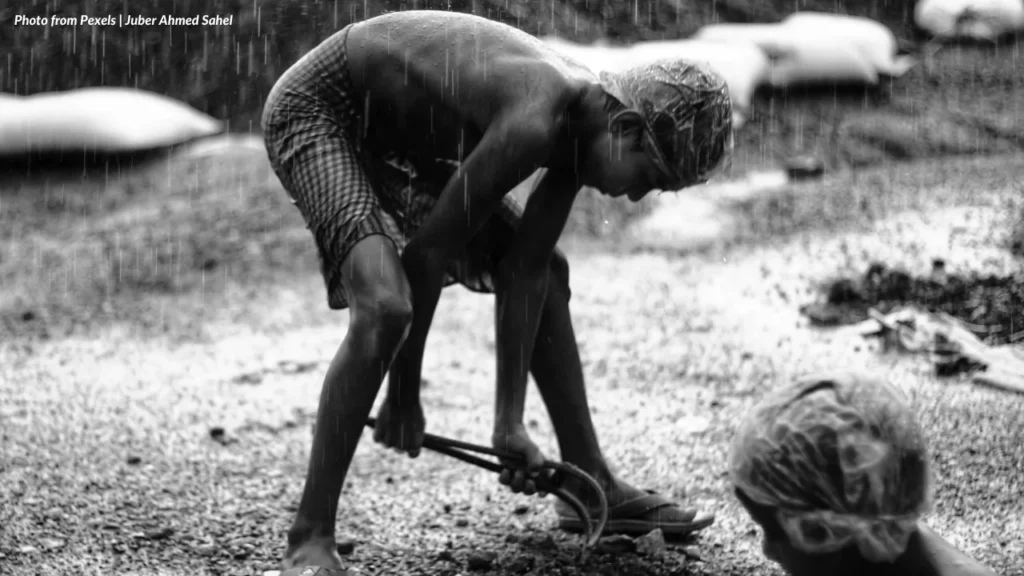
Children occupy a special place in Philippine law. Recognizing their vulnerability to exploitation, the State has adopted measures to ensure that children are protected from hazardous work and the worst forms of child labor.
Section 1 of Republic Act No. 9231, which amended Republic Act No. 7610, declares it to be the policy of the State that the best interests of children shall be the paramount consideration in all actions concerning them, whether undertaken by public or private social welfare institutions, courts of law, administrative authorities, and legislative bodies, consistent with the principle First Call for Children as enunciated in the United Nations Convention on the Rights of the Child.
The law likewise mandates that every effort shall be exerted to promote the welfare of children and enhance their opportunities for a useful and happy life.
What are the Worst forms of child labor?
The law expressly prohibits the engagement of any child in the worst forms of child labor.
Section 3 of Republic Act No. 9231, amending Section 12-D of Republic Act No. 7610, defines the phrase “worst forms of child labor” as follows:
- All forms of slavery, as defined under the “Anti-trafficking in Persons Act of 2003”, or practices similar to slavery such as sale and trafficking of children, debt bondage and serfdom and forced or compulsory labor, including recruitment of children for use in armed conflict; or
- The use, procuring, offering or exposing of a child for prostitution, for the production of pornography or for pornographic performances; or
- The use, procuring or offering of a child for illegal or illicit activities, including the production and trafficking of dangerous drugs and volatile substances prohibited under existing laws; or
- Work which, by its nature or the circumstances in which it is carried out, is hazardous or likely to be harmful to the health, safety or morals of children.
What Constitutes Hazardous Work?
Section 3 of Republic Act No. 9231 further provides that hazardous work, or work likely to be harmful to the health, safety, or morals of children, includes work that:
- Debases, degrades or demeans the intrinsic worth and dignity of a child as a human being; or
- Exposes the child to physical, emotional or sexual abuse, or is found to be highly stressful psychologically or may prejudice morals; or
- Is performed underground, underwater or at dangerous heights; or
- Involves the use of dangerous machinery, equipment and tools such as power-driven or explosive power-actuated tools; or
- Exposes the child to physical danger such as, but not limited to the dangerous feats of balancing, physical strength or contortion, or which requires the manual transport of heavy loads; or
- Is performed in an unhealthy environment exposing the child to hazardous working conditions, elements, substances, co-agents or processes involving ionizing, radiation, fire, flammable substances, noxious components and the like, or to extreme temperatures, noise levels, or vibrations; or
- Is performed under particularly difficult conditions; or
- Exposes the child to biological agents such as bacteria, fungi, viruses, protozoans, nematodes and other parasites; or
- Involves the manufacture or handling of explosives and other pyrotechnic products.
Additional Protection Under DOLE Regulations
The Department of Labor and Employment (DOLE), through Department Order No. 65-04, which implements Republic Act No. 9231, further prohibits the employment of children as models in advertisements that directly or indirectly promote:
- alcoholic beverages;
- intoxicating drinks;
- tobacco and tobacco products;
- gambling;
- violence; or
- pornography.
These implementing rules reinforce the State’s policy of protecting children from work and activities that expose them to exploitation or are detrimental to their physical, mental, emotional, or moral development.
Furthermore, DOLE Labor Advisory No. 12, Series of 2026, clarified that Republic Act No. 9231, or the law that protects working children, applies not only to traditional media but also to digital platforms where children create or appear in content. Thus, a Working Child Permit for children under 15 in vlogs, social media, and streaming content.
Related article: Rights of Working Children
Click here to subscribe to our newsletter
Alburo Alburo and Associates Law Offices specializes in business law and labor law consulting. For inquiries regarding legal services, you may reach us at info@alburolaw.com, or dial us at (02)7745-4391/ 09175772207/ 09778050020.
All rights reserved.