

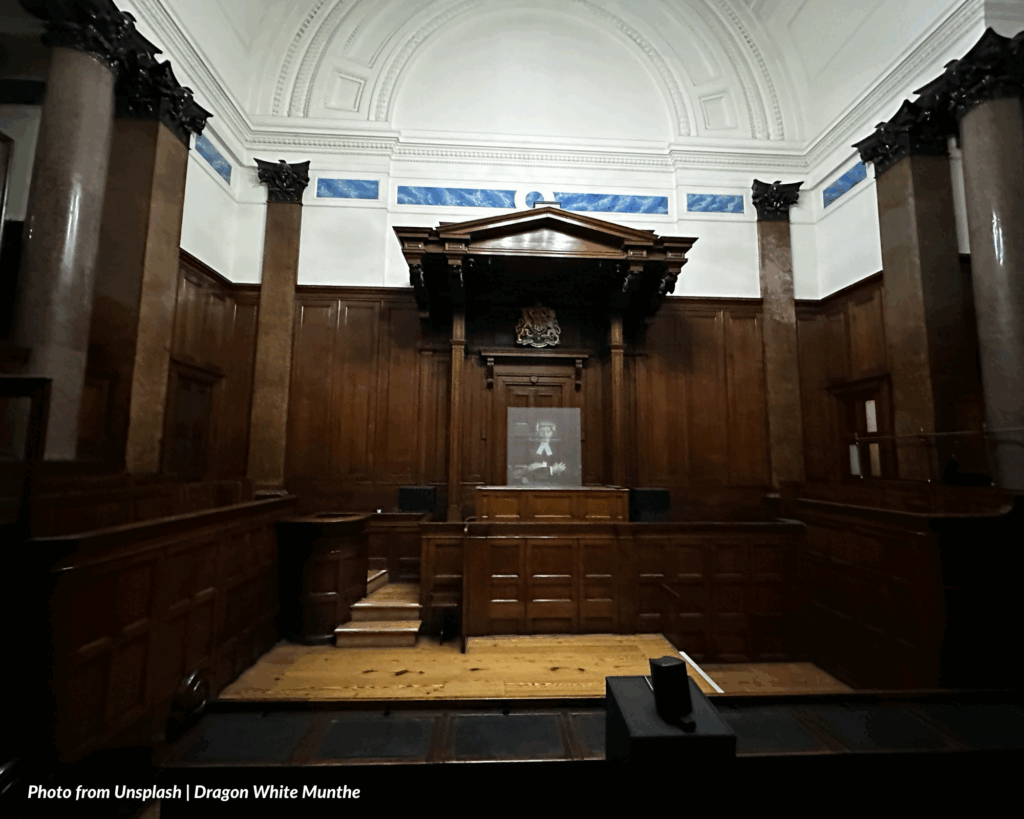
Photo from Unsplash | Dragon White Munthe
The following post does not create a lawyer-client relationship between Alburo Alburo and Associates Law Offices (or any of its lawyers) and the reader. It is still best for you to engage the services of a lawyer or you may directly contact and consult Alburo Alburo and Associates Law Offices to address your specific legal concerns, if there is any.
Also, the matters contained in the following were written in accordance with the law, rules, and jurisprudence prevailing at the time of writing and posting, and do not include any future developments on the subject matter under discussion.
AT A GLANCE:
The Supreme Court promulgated the Rules on Expedited Procedures in the First Level Courts to address the need to recalibrate, reconcile, and harmonize the coverage of the 1991 Revised Rule on Summary Procedure and 2016 Revised Rules on Small Claims Cases to efficiently attain their objectives. The new Rules enumerate the cases covered by these procedures.
The Rules on Expedited Procedures in the First Level Courts (A.M. No. 08-8-7-SC) govern the expedited procedures in the Metropolitan Trial Courts (MeTCs), the Municipal Trial Courts in Cities (MTCCs), the Municipal Trial Courts (MTCs), and the Municipal Circuit Trial Courts (MCTCs), for the following cases falling within their jurisdiction:
Summary Procedure Cases
A. Civil Cases
(a) Forcible entry and unlawful detainer cases, regardless of the amount of damages or unpaid rentals sought to be recovered. Where attorney’s fees are awarded, the same shall not exceed One Hundred Thousand Pesos (₱100,000.00).
(b) All civil actions, except probate proceedings, admiralty and maritime actions, and small claims cases falling under Rule IV hereof, where the total amount of the plaintiff ’s claim does not exceed Two Million Pesos (₱2,000,000.00), exclusive of interest, damages of whatever kind, attorney’s fees, litigation expenses and costs.
(c) Complaints for damages where the claim does not exceed Two Million Pesos (₱2,000,000.00), exclusive of interest and costs.
(d) Cases for enforcement of barangay amicable settlement agreements and arbitration awards where the money claim exceeds One Million Pesos (₱1,000,000.00), provided that no execution has been enforced by the barangay within six (6) months from the date of the settlement or date of receipt of the award or from the date the obligation stipulated or adjudged in the arbitration award becomes due and demandable, pursuant to Section 417, Chapter VII of Republic Act No. 7160, otherwise known as The Local Government Code of 1991.
(e) Cases solely for the revival of judgment of any Metropolitan Trial Court, Municipal Trial Court in Cities, Municipal Trial Court, and Municipal Circuit Trial Court, pursuant to Rule 39, Section 6 of the Rules of Court.
(f) The civil aspect of a violation of Batas Pambansa Blg. 22 (the Bouncing Checks Law), if no criminal action has been instituted therefor. Should a criminal action be later instituted for the same violation, the civil aspect shall be consolidated with the criminal action and shall be tried and decided jointly under the Rule on Summary Procedure.
B. Criminal Cases
(1) Violations of traffic laws, rules and regulations;
(2) Violations of the rental law;
(3) Violations of municipal or city ordinances;
(4) Violations of Batas Pambansa Blg. 22 (the Bouncing Checks Law); and
(5) All other criminal cases where the penalty prescribed by law for the offense charged is imprisonment not exceeding one (1) year, or a fine not exceeding Fifty Thousand Pesos (₱50,000.00), or both, regardless of other imposable penalties, accessory or otherwise, or of the civil liability arising therefrom. In offenses involving damage to property through criminal negligence under Article 365 of the Revised Penal Code, this Rule shall govern where the imposable fi ne does not exceed One Hundred Fifty Thousand Pesos (₱150,000.00).
If the prescribed penalty consists of imprisonment and/or a fine, the prescribed imprisonment shall be the basis for determining the applicable procedure.
All other cases not included herein shall be governed by the regular rules of procedure.
Small Claims Cases
A “small claim” is an action that is purely civil in nature where the claim or relief raised by the plaintiff is solely for the payment or reimbursement of a sum of money. It excludes actions seeking other claims or reliefs aside from payment or reimbursement of a sum of money and those coupled with provisional remedies.
In small claims cases, the claim does not exceed One Million Pesos (₱1,000,000.00), exclusive of interest and costs. The claim or demand may be:
(a) For money owed under any of the following:
- Contract of Lease;
- Contract of Loan and other credit accommodations;
- Contract of Services; or
- Contract of Sale of personal property, excluding the recovery of the personal property, unless it is made the subject of a compromise agreement between the parties.
(b) The enforcement of barangay amicable settlement agreements and arbitration awards, where the money claim does not exceed One Million Pesos (₱1,000,000.00), provided that no execution has been enforced by the barangay within six (6) months from the date of the settlement or date of receipt of the award or from the date the obligation stipulated or adjudged in the arbitration award becomes due and demandable, pursuant to Section 417, Chapter VII of Republic Act No. 7160, otherwise known as The Local Government Code of 1991
Click here to subscribe to our newsletter
Alburo Alburo and Associates Law Offices specializes in business law and labor law consulting. For inquiries regarding legal services, you may reach us at info@alburolaw.com, or dial us at (02)7745-4391/ 0917-5772207/ 09778050020.
All rights reserved.
Leave a Reply