
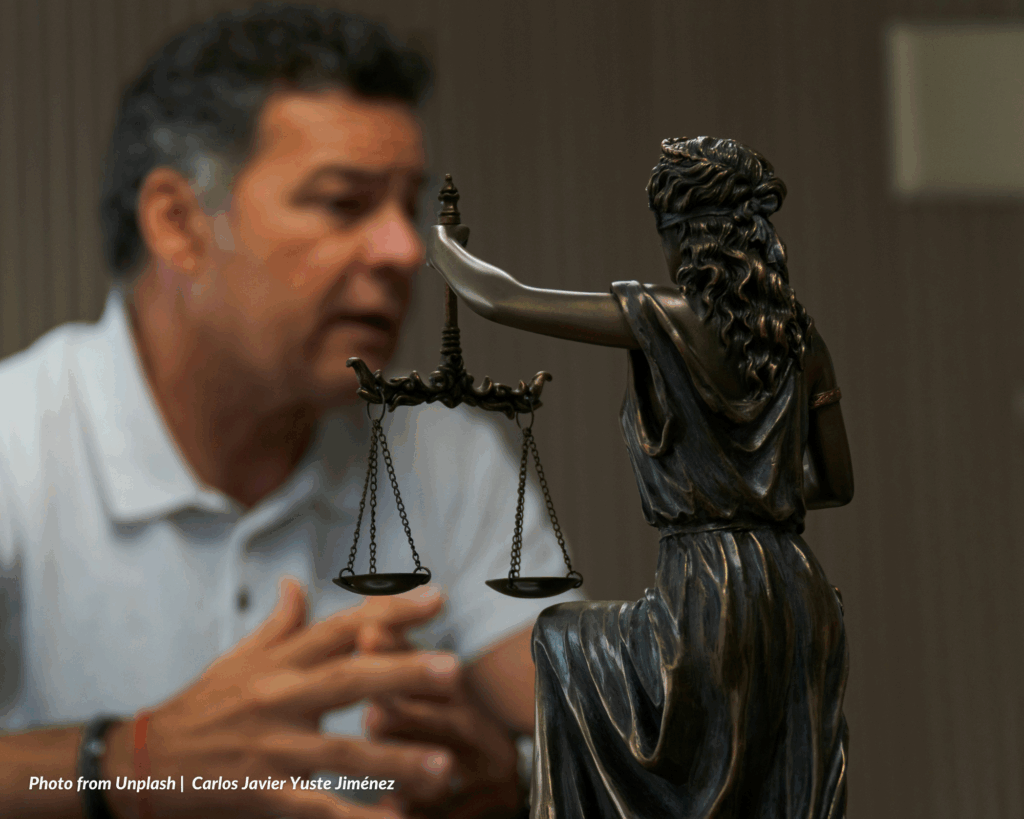
Photo from Unsplash | Carlos Javier Yuste Jiménez
The following post does not create a lawyer-client relationship between Alburo Alburo and Associates Law Offices (or any of its lawyers) and the reader. It is still best for you to engage the services of a lawyer or you may directly contact and consult Alburo Alburo and Associates Law Offices to address your specific legal concerns, if there is any.
Also, the matters contained in the following were written in accordance with the law, rules, and jurisprudence prevailing at the time of writing and posting, and do not include any future developments on the subject matter under discussion.
AT A GLANCE:
The condonation doctrine holds that a public official’s re-election bars removal for administrative misconduct committed during a prior term, as it is deemed a public condonation of past acts. However, in Carpio-Morales v. Binay, the Supreme Court abandoned the doctrine for lack of legal basis and for being contrary to the Constitution, with the ruling applying prospectively from April 12, 2016.
The condonation doctrine states that an elected public official cannot be removed for administrative misconduct committed during a prior term, since his re-election to office operates as a condonation of the officer’s previous misconduct to the extent of cutting off the right to remove him therefor.
In Salalima v. Guingona, Jr. (G.R. No. 117589-92), the Court stated that the condonation doctrine is not only founded on the theory that an official’s re-election expresses the sovereign will of the electorate to forgive or condone any act or omission constituting a ground for administrative discipline which was committed during his previous term. The same is also justified by “sound public policy.” The Court held that to rule otherwise would open the floodgates to exacerbating endless partisan contests between the re-elected official and his political enemies, who may not stop to hound the former during his new term with administrative cases for acts alleged to have been committed during his previous term. His second term may thus be devoted to defending himself in the said cases to the detriment of public service.
The condonation doctrine was abandoned in Carpio-Morales v. Binay (G.R. No. 217126-27, 2015) primarily on the grounds that there was no legal authority to sustain the condonation doctrine in this jurisdiction, and for being contrary to the present Constitution’s mandate of holding all public officials and employees accountable to the people at all times. However, the Court clarified that the abandonment of the condonation doctrine shall be prospective in application for the reason that judicial decisions applying or interpreting the laws or the Constitution, until reversed, shall form part of the legal system of the Philippines. Said ruling became final on April 12, 2026, thus, the abandonment should be reckoned from said date.
Click here to subscribe to our newsletter
Alburo Alburo and Associates Law Offices specializes in business law and labor law consulting. For inquiries regarding legal services, you may reach us at info@alburolaw.com, or dial us at (02)7745-4391/ 09175772207/ 09778050020.
All rights reserved.
Leave a Reply