

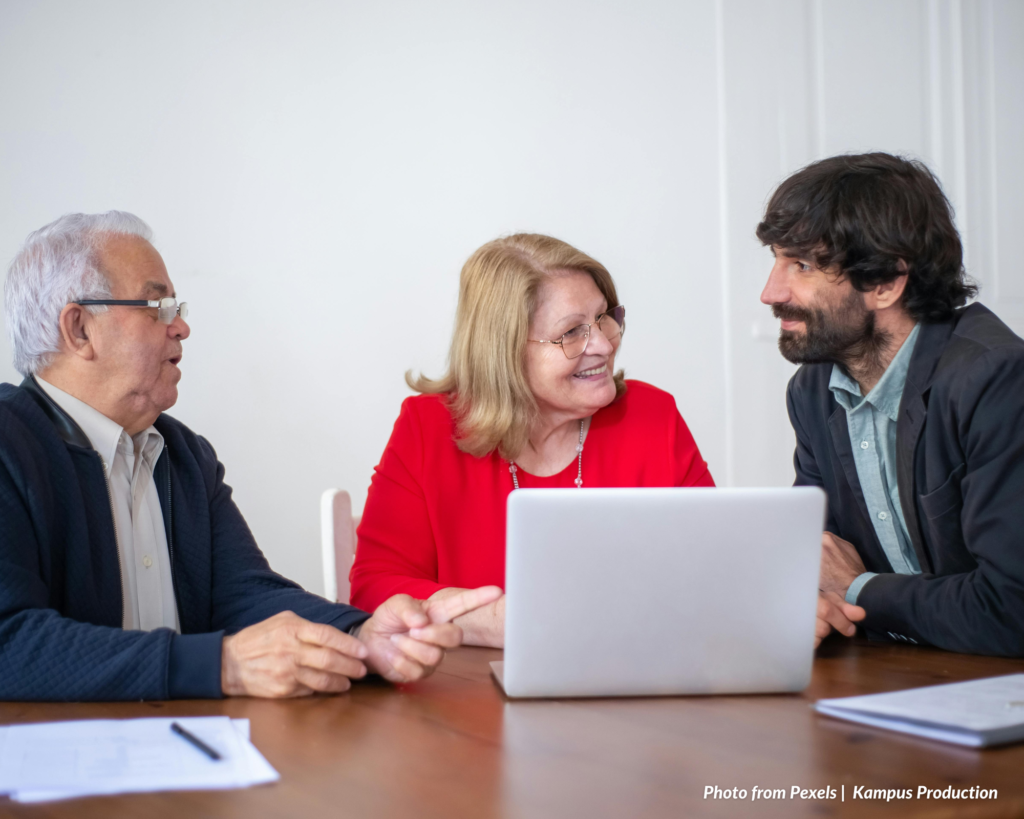
Photo from Pexels | Kampus Production
This article was originally published on June 1, 2022 and has been updated to reflect recent legal developments.
The following post does not create a lawyer-client relationship between Alburo Alburo and Associates Law Offices (or any of its lawyers) and the reader. It is still best for you to engage the services of a lawyer or you may directly contact and consult Alburo Alburo and Associates Law Offices to address your specific legal concerns, if there is any.
Also, the matters contained in the following were written in accordance with the law, rules, and jurisprudence prevailing at the time of writing and posting, and do not include any future developments on the subject matter under discussion.
AT A GLANCE:
A will is an act whereby a person is permitted, the formalities prescribed by law, to control to a certain degree the disposition of this estate, to take effect after his death. The making of a will is a strictly personal act; it cannot be left in whole or in part to the discretion of a third person, or accomplished through the instrumentality of an agent or attorney. (Articles 783 and 784 of the Civil Code)
You might want to consider making a will. The question is, “Are you capacitated to make a will?”
Under Articles 796 to 798 of the Civil Code, all persons who are not expressly prohibited by law may make a will. Persons of either sex under eighteen years of age cannot make a will. In order to make a will it is essential that the testator be of sound mind at the time of its execution.
Article 799 of the Civil Code provides that to be of sound mind, it is not necessary that the testator be in full possession of all his reasoning faculties, or that his mind be wholly unbroken, unimpaired, or unshattered by disease, injury, or other cause. It shall be sufficient if the testator was able at the time of making the will to know the following:
- the nature of the estate to be disposed of
- the proper objects of his bounty
- the character of the testamentary act
Should the testator prove that he or she was of sound mind at the time he or she made a will?
The law presumes that every person is of sound mind, in the absence of proof to the contrary. The burden of proof that the testator was not of sound mind at the time of making his dispositions is on the person who opposes the probate of the will; but if the testator, one month, or less, before making his will was publicly known to be insane, the person who maintains the validity of the will must prove that the testator made it during lucid interval. (Article 800)
May a married woman make a will without the consent of her husband?
A married woman may make a will without the consent of her husband, and without the authority of the court. (Art. 802)
A married woman may dispose by will of all her separate property as well as her share of the conjugal partnership or absolute community property.
Related Articles:
Click here to subscribe to our newsletter
Alburo Alburo and Associates Law Offices specializes in business law and labor law consulting. For inquiries regarding legal services, you may reach us at info@alburolaw.com, or dial us at (02)7745-4391/ 09175772207/ 09778050020.
All rights reserved.